Contents
Our partnership with the Green Climate Fund grew substantially in 2025. We worked closely with them as well as the Global Partnership for Education, governments, schools, and communities across more than 30 countries to strengthen children’s resilience to climate change.
As a result, previously isolated communities like Kilokaka in Solomon Islands are now identifying climate risks and implementing practical adaptation plans; Malawi is building a climate smart education system including developing climate response plans in 112 schools; and in Lao PDR, we launched a training program to empower health officials to maintain Safe, Clean, Green, and Climate-Resilient Health Facilities across seven climate-vulnerable provinces.
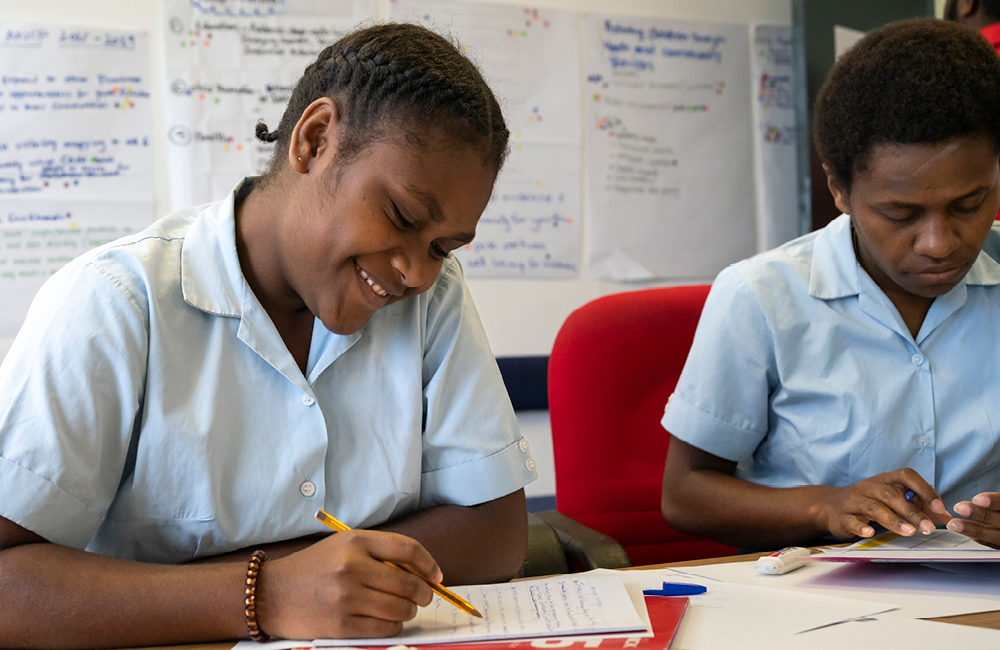
Library For All expanded access to culturally relevant children’s books, publishing 443 titles and delivering over 102,000 books in Australia, Papua New Guinea, Vanuatu, Timor-Leste, Nepal and Bhutan, with additional local printing in Bangladesh, Myanmar, the West Bank in the Occupied Palestinian Territory and Ukraine.
We also created two new collections: 200 titles for Palestinian children in Gaza and the West Bank, delivered in print and through the Arabic Reader app; and a collection of 120 community-generated stories in Vanuatu, reaching all primary schools in partnership with the Ministry of Education.
In Australia, Our Yarning (a First Nations-led storytelling and education initiative) engaged 87 community members and youth in storytelling workshops, resulting in 96 new titles for First Nations children.
The Centre for Evidence and Implementation is helping build a better foundation for healthy and respectful relationships among young Aboriginal people by bringing together cultural knowledge with research evidence and culturally-relevant implementation, in collaboration with the Victorian Aboriginal Child and Community Agency (VACCA).
The best advice on building healthy digital habits for children and young people is now available to families in Singapore thanks to our development of evidence-based screentime guidance for 7- to 18-year-olds for the Singapore Government.
And we helped drive success in getting promising education improvements to more students across early years, primary and secondary education settings with a scaling framework and assessment tool developed with our UK partners BIT and Education Endowment Foundation.
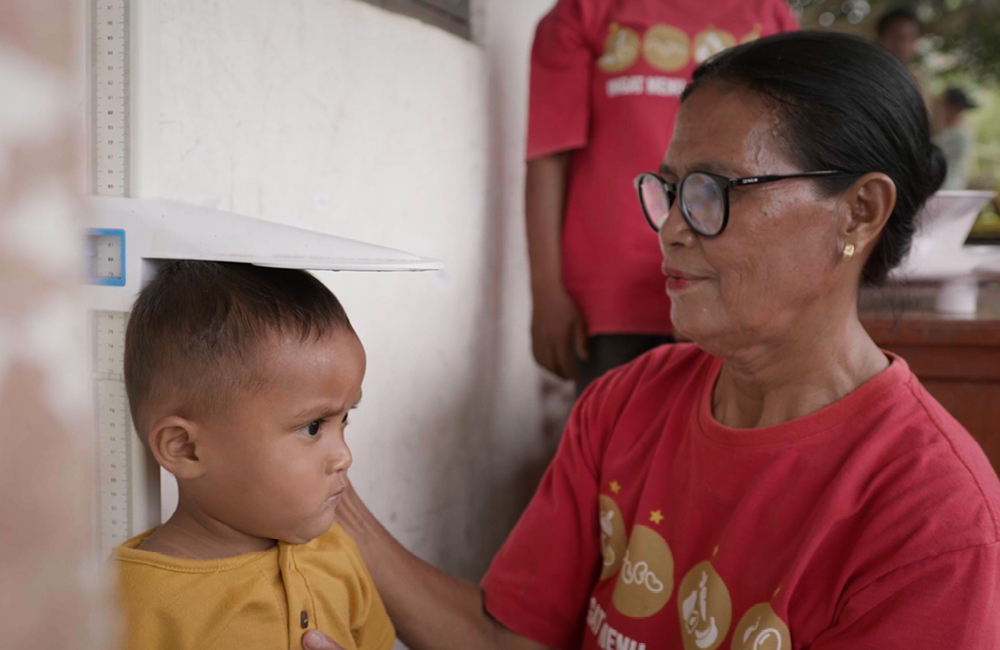
The Impact Investment Fund invested in PrimaKu, a digital health solution that has helped over two million children in Indonesia access life-saving vaccinations and preventative care.
We also made a follow-on investment into Oho, which is driving cleaner, more reliable data to ensure better safeguarding of vulnerable children across Australia, strengthening child protection systems nationwide.
And we established a strategic partnership with KK Hospital to accelerate breakthrough children's healthcare outcomes across South East Asia through the Asia Healthcare Fund, focusing on innovative care models and expanded access to quality paediatric services
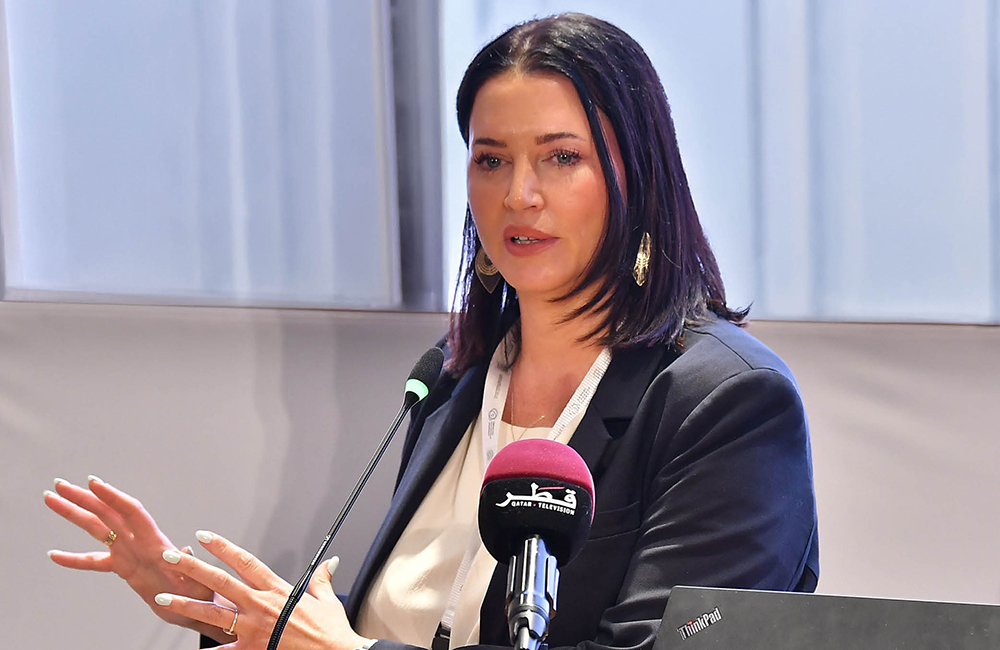
The 2025 Humanitarian Leadership Conference convened 441 delegates from over 70 countries in Doha, Qatar, for transformative discussions on the future of humanitarian action and leadership.
The Crisis Leadership Program continued to expand its reach, with 226 participants completing one of the three courses offered for humanitarians in Sudan, the Democratic Republic of Congo, and Qatar for humanitarians based in the Middle East and beyond.
And despite challenges presented by the USAID closure, 61 students graduated from the seventh cohort of the Diplôme d’Études Supérieures en Leadership Humanitaire, a French-language humanitarian leadership diploma accredited by Deakin University.
We celebrated five years in partnership with Australia's leader in textile recovery and recycling, UPPAREL. Since September 2020, our partnership has saved 126,447 items from landfill and raised more than $1.4 million.
Our corporate volunteering program was a vital part of our retail stores' success in 2025, with 544 corporate volunteers from 66 teams across 25 organisations giving a total of 2,865 hours to our stores and warehouses.
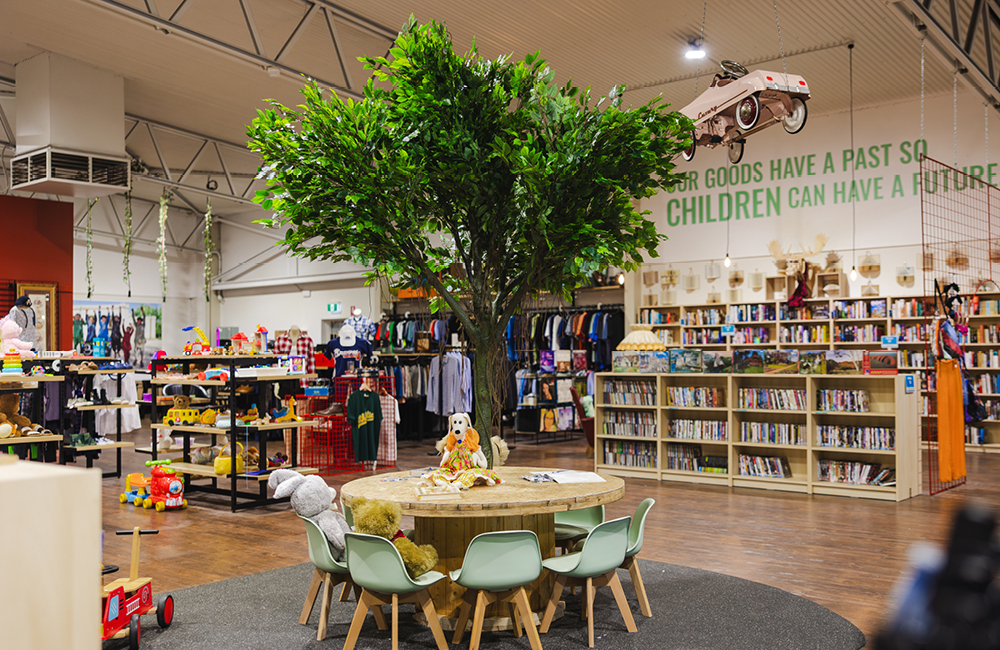
And in February 2025 we opened our second large format new-look store in Croydon, SA. Our new stores are even more than an Op Shop – they come with a community space, library and children’s area.

In 2025, Save the Children Australia was supported by the Australian Government through the Australian NGO Cooperation Program (ANCP) to implement programs in Cambodia, Indonesia, Iraq, Papua New Guinea, Philippines, Solomon Islands, Sri Lanka, Tonga, Vanuatu and Vietnam; through the Australian Humanitarian Partnership (AHP) to implement programs in Bangladesh, Indonesia, Myanmar, Pakistan, Papua New Guinea, Philippines, Solomon Islands, Sri Lanka, Vanuatu, Vietnam; and through other Department of Foreign Affairs and Trade (DFAT) support for Lao PDR, Papua New Guinea, Solomon Islands and Vanuatu.
Save the Children Australia is a member of the Emergency Action Alliance (EAA), a collective of Australia-based aid organisations that uses its combined reach and resources to raise more money for greater impact.
Save the Children is a signatory to the ACFID Code of Conduct, a voluntary self-regulatory sector code of good practice. We are committed to fully adhering to the Code, conducting our work with transparency, accountability and integrity.