Reflections on Pacific feminist leadership, online misogyny, & voice
Cashelle Dunn is a Gender Equality, Disability and Social Inclusion (GEDSI) Technical Advisor at Save the Children Australia. Drawing on both professional and lived experience, her work spans human rights advocacy, child protection and international development. She has a particular interest in how online spaces, power, marginalisation and gender shape the lives of young people.
In April this year, I attended Women Deliver, one of the world’s largest convenings on gender equality. Over 6000+ feminists, researchers, young leaders and activists from around the world came together in Naarm/Melbourne over five intense, energising days driving change for women and girls.
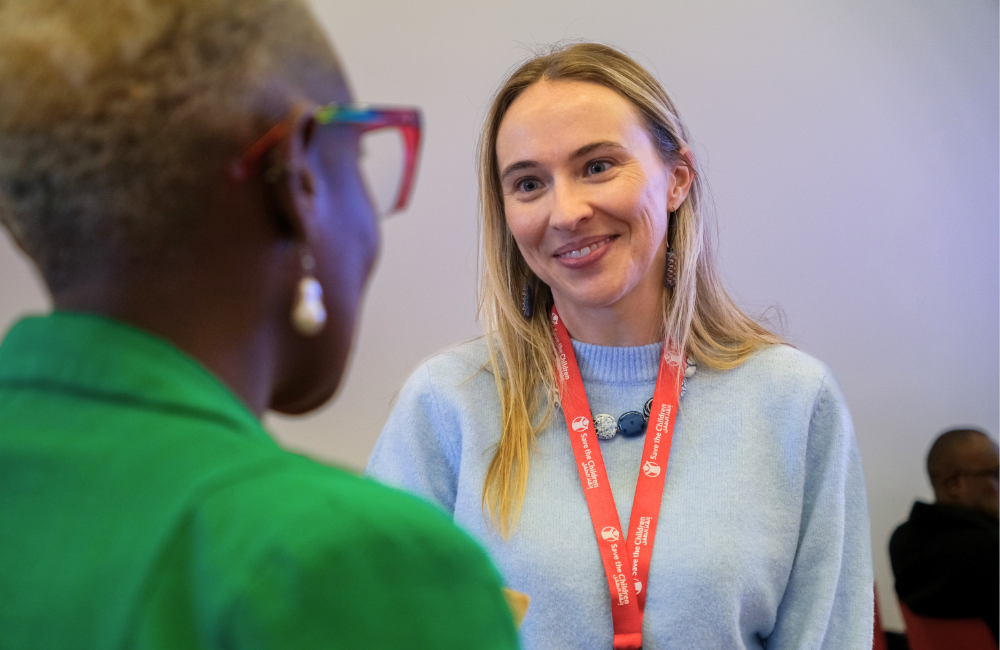
Cashelle Dunn, GEDSI Technical Advisor, speaks with another delegate at Women Deliver in Naarm/Melbourne.
Photo: Katharina Glynne/Save the Children Australia
Hosted in the Oceanic region for the first time ever, there was something especially powerful about seeing Pacific voices and leadership centred in a space of this scale. I had never been to a conference where intersectionality was so central to the experience. As a woman with disability this made me feel accepted and hopeful.
I felt incredibly proud to attend as part of Save the Children Australia’s delegation, with an amazing group of Pacific staff and young delegates from across the region whose clarity, warmth and political insight consistently cut through some of the biggest conversations happening that week.
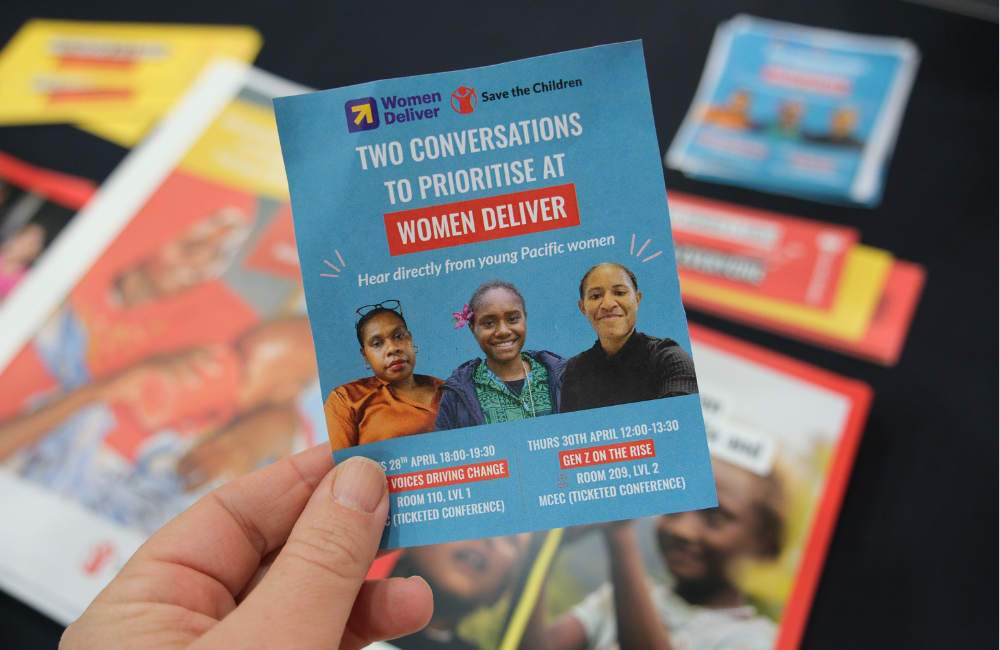
Our Pacific delegates led conversations across several events at Women Deliver.
Photo: Save the Children Australia
Raising boys in the age of the algorithm
One thing I was pleased to see at Women Deliver was how often people talked about boys.
Not in a defensive “what about men?” way, but in a genuinely concerned way. Across panels, side events and conversations in hallways, we kept circling back to the same question: what happens when boys grow up online in a world where misogyny is no longer fringe, but algorithmically rewarded? Worse still, increasingly monetised and packaged into highly sophisticated ecosystems preying on young men?
At one point, Francis Woods - our Executive Director of International Programs - and I found ourselves talking about raising boys in an age where social media shapes so much of how they understand gender and respectful relationships. We know that prolonged exposure to misogynistic content can normalise harmful ideas about dominance, control and entitlement, hurting boys themselves while also increasing the risk of violence against girls.
As a father of two sons, Francis spoke about the responsibility he feels to raise boys with empathy and a healthy sense of identity. We agreed that if we’re serious about tackling online misogyny, we need to give boys positive role models and healthier narratives about masculinity – and support parents to do the same.
It’s a need Save the Children is seeing in our work right around the world. That’s why we're not just helping children build digital safety skills and respectful relationships, but also supporting parents, teachers and schools to model and reinforce those behaviours every day.
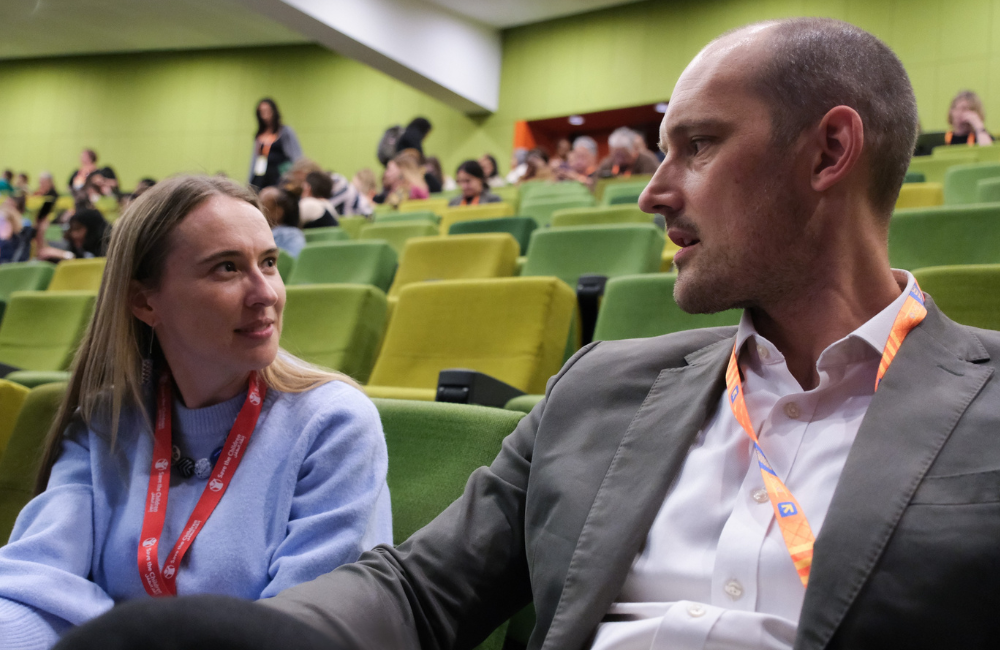
Cashelle and Francis Woods discuss raising boys at Women Deliver in Naarm/Melbourne.
Photo: Katharina Glynne/Save the Children
There were also important conversations throughout the week about AI, including in a session from Matriarchs.ai about turning technology into power for gender equality movements. In the interactive discussion, we spoke about our fears and the risks and harms we already see occurring, such as surveillance, deepfakes and Nudify apps. We also acknowledged that many harms are likely yet unknown, emerging daily in this rapidly evolving space.
However, the speakers also positioned fear as a signal of our values, and innovation as something that requires engagement with discomfort. I was reminded that the future of AI is not fixed, and we have a role right now in shaping AI to reflect the values and power structures we want. It’s not too late.
These issues were not just acknowledged in side discussions. Governments from across the Asia-Pacific region spoke about the importance of online safety for young women, girls, and gender-diverse children, particularly those with disability. From high-level parliamentary discussions to the plenary sessions, conversations about sexual and reproductive health and rights and gender justice, inevitably turned to the role of technology, the influence of power structures, and the urgent need for protections across all areas of health and safety.
From participation to power
While there was a lot of concern at Women Deliver about what is growing online, there was also a huge amount of clarity and optimism from young women and gender-diverse youth themselves.
The clearest examples for me were Vepaiamele, Elizabeth and Kaysha, the three young Pacific delegates attending Women Deliver with Save the Children Australia. Over five days, I watched them speak about the intersection of digital safety, climate change and gender equality and the importance of girls’ leadership in all these spaces.