Project/Icons / advocateProject/Icons / appealsProject/Icons / blog postProject/Icons / documentsProject/Icons / educateProject/Icons / healthProject/Icons / media releaseIcons/moneyIcons/moneyx2Project/Icons / petitionIcons/Ionic/Social/social-pinterestProject/Icons / protectProject/Icons / quoteProject/Icons / supportProject/Icons / volunteerProject/Icons / water
Donate
Page banner

The good mosquito

27 May 2026, Impact of Our Work

A special breed changing lives in Laos

Is there such thing as a good mosquito? We’ve all experienced the annoyance of trying to sleep, hearing the ominous whine of a mosquito as it draws near. In some places, like Laos, a mosquito bite can even be deadly. But a particular breed of mosquito is making a difference.

Mosquitos are scary. I want to get rid of all mosquitos

Fha, 5 years old


Fha, 5, attends a colouring class where she talks about the risks of dengue with other children.
Photo: Linh Pham / Save the Children.


Dengue fever is a viral infection transmitted to humans from mosquito bites and is endemic in Laos, where infections peak during the warmer, wetter months. The virus causes a high fever, severe headaches and muscle and joint pain. Without quick and effective treatment, dengue can be deadly. Those most likely to experience severe symptoms are elderly people, pregnant women and young children. 

In the last few years Laos has experienced repeated epidemics of dengue with a major one in 2019 resulting in 39,000 cases. In 2024 where there were roughly 20,000 cases resulting in 11 deaths. Those impacted by the illness can have long term effects such as persistent fatigue, joint and muscle pain and cognitive issues such as memory loss.

The innovative idea stopping the spread 

In 2023, Save the Children partnered with the World Mosquito Program and the Laos Ministry of Health to launch a pilot program to release specially bred mosquitos in dengue hotspots. These unique mosquitos carry the Wolbachia virus – a naturally occurring bacteria that reduces the mosquito’s ability to pass on dengue – and once released breed with local species to create a self-sustaining population.  

With support from the Australian government, the program was expanded in 2025 to cover all nine districts of the capital Vientiane. The release will help ensure that 1.2 million people are better protected from the virus.

This safe, cost effective and sustainable method is a long-term solution to significantly reduce dengue. Research shows the Wolbachia mosquitoes are becoming prevalent in Vientiane, helping reduce the risk of dengue to children and their families living in areas where the disease is rampant. 

Our teams have worked tirelessly to build strong community understanding and support for the program. By empowering people to understand and champion the Wolbachia method, we’re turning a proven scientific method into a successful, locally owned public health intervention. 

Dr Anny, a medical doctor with Laos Ministry of Health supports the initiative. “As doctors or those who provide patient care, we would like to see a picture where there are far less patients with dengue who come to this hospital for treatment,” she says.
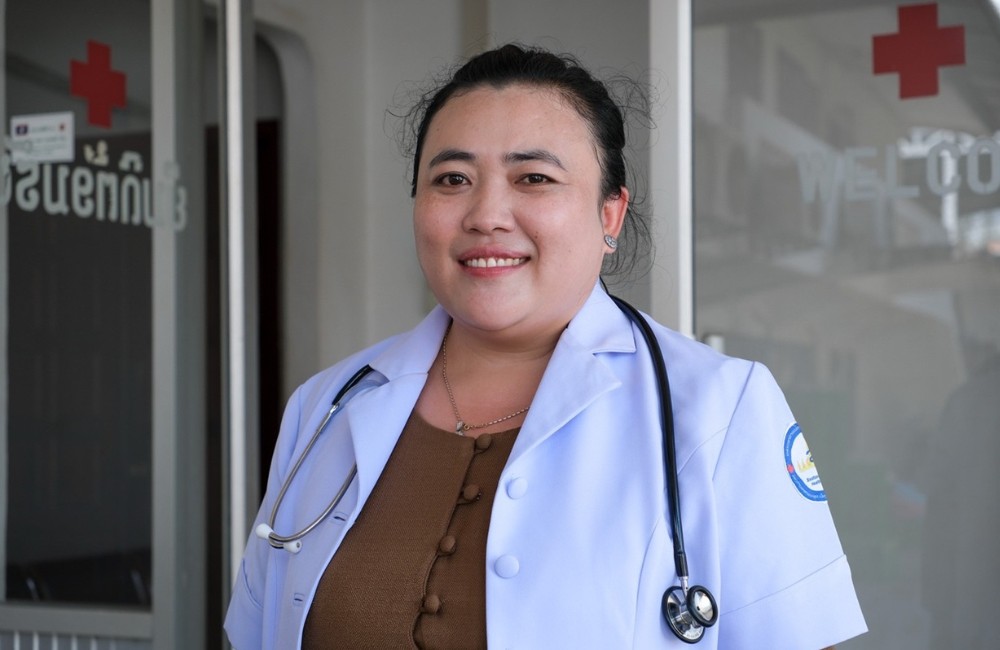

Dr Anny is a doctor in support of the Driving Down Dengue Program in Laos.
Photo: Katharina Glynne/Save the Children Australia.

Australian science driving results in Asia

First developed in Australia in the late 2000s, the Wolbachia method is now being used globally, from Latin America to Asia and beyond, and has helped protect more than 16 million people from mosquito-borne diseases like dengue. What began as pioneering Australian research has grown into one of the world’s most promising public health innovations.

For our Laos initiative, Mosquitos are collected in Laos and transported to the World Mosquito Program’s facility at Monash University in Melbourne, where they are bred to carry the Wolbachia bacteria. After eggs are then harvested, freeze dried and sent back to laboratories in Laos, where the mosquitoes are reared to adulthood. These specially bred mosquitos are packaged and distributed by trained volunteers, who use mobile apps to navigate to locations to release them.

“It will be a good mosquito. It will destroy and stop dengue in our homes and our communities.” Ladkham, Village Health Volunteer.


Village Health Volunteer, Ladkham, observes Wolbachia mosquitoes prior to releasing them.
Photo: Katharina Glynne/Save the Children Australia.

The Wolbachia mosquito - or the ‘good mosquito’ as it is called in Lao - carries high expectations and hopes for communities impacted in Laos. Monitoring has shown success and if dengue is reduced, it will protect children and families across the country. 

The time for scaling up is now. This groundbreaking program is already changing lives, helping communities build safer and healthier futures free from dengue. 

The Driving Down Dengue in Laos project is supported by the Australian government.
 

Stay up to date on how Save the Children is creating a world where every child has a safe and happy childhood