The year in review
From a ban on child marriage to disease-reducing mosquitos, here are 10 positive changes and outcomes for children that happened in 2025.
1. Celebrating 20 years of Communities for Children in the East Kimberley
For two decades, Communities for Children has been playing a vital role in supporting children and families across the East Kimberley. Delivered by 54 reasons in close collaboration with our local partners, the initiative uses play-based learning, school readiness programs and strong community relationships to help transform early childhood education in the region.
Watch this short video for a look inside the play spaces, learning centres and partnerships that have shaped the lives of multiple generations over the past 20 years.
2. Bolivia bans child marriage
Bolivia became the 14th country in Latin America to ban child marriage after girls across the country and Save the Children joined a campaign to criminalise the practice. Before the law was passed, more than one in five girls were forced into unions before the age of 18, and about 3% were married before the age of 15.
The approval of this law marks a new reality for over 4 million children across Bolivia and represents a fundamental victory in the fight for the rights of children.
3. Historic court ruling acknowledges impacts of climate change on children’s rights
In a landmark win for children, the International Court of Justice (ICJ) acknowledged the adverse impacts of climate change on child rights, and offered children renewed hope.
The Advisory Opinion – delivered by the world’s highest court – found that states’ legal obligations to address climate change extend beyond existing climate agreements.
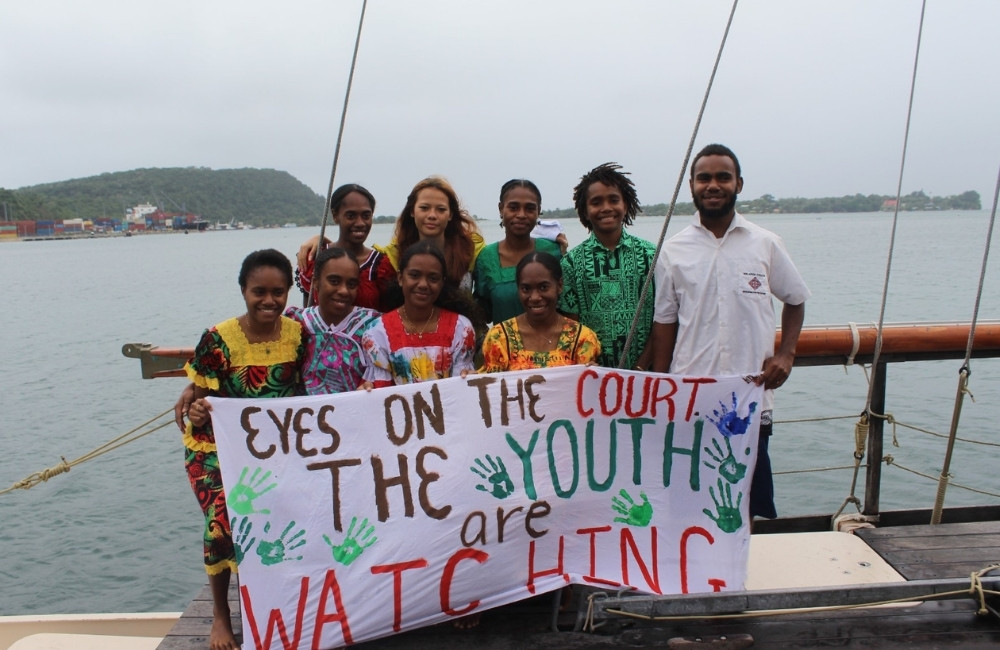
Save the Children Vanuatu NextGen Youth Ambassadors and youth climate activists demonstrating ahead of the historic ICJ Advisory Opinion.
Photo: Save the Children Vanuatu.
Research released this year by Save the Children with the Vrije Universiteit Brussel (VUB) found that the difference between global temperature rise of 1.5°C and 2.7°C could see 38 million more children from the 2020 birth cohort face unprecedented lifetime exposure to extreme heatwaves.
4. Corporal punishment is banned in Thailand
Thailand became the 68th country to ban the use of corporal punishment, a practice still widely accepted at home and in school, reflecting deeply rooted cultural attitudes.
Three in four children aged 1-14 in Thailand have experienced some form of corporal punishment.
The new law bans the use of all types of violent discipline or corporal punishment in schools, homes, residential care facilities, juvenile protection and training centres, and daycare centres.
5. Children in Somalia have greater legal protections
Children across Somalia will have greater legal protections for themselves and their rights, including access to health and education, after Somalia’s federal parliament ratified Africa’s only regional charter on the rights of the child.
After decades of conflict in Somalia, cases of grave violations of children remain rampant including sexual assault, abductions, and recruitment into armed groups.
With the charter’s strong calls for child participation and elimination of harmful cultural practices, Somalia will be required to take all necessary steps to advance legal protections for children and allocate adequate resources for enforcement.
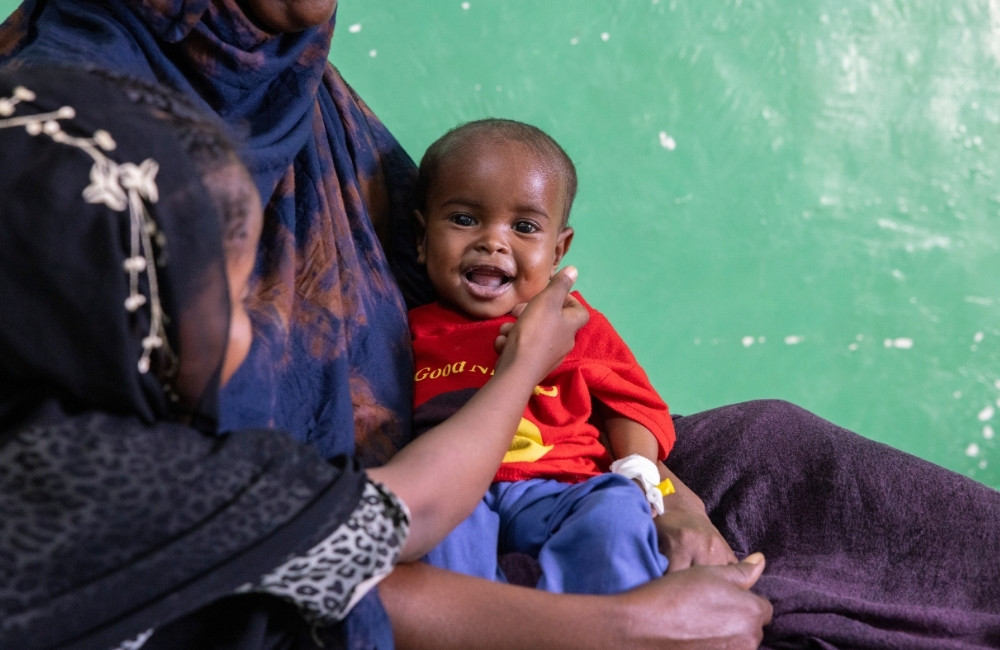
 Ikran* smiles after receiving treatment for malnutrition at a Save the Children-supported stabilisation centre.
Photo: Kate Stanworth / Save the Children.
6. 40 Tonnes of medical aid reached Sudan, destined for children and families
A cargo plane carrying 40 metric tonnes of medical supplies landed in Port Sudan in November, with essential medical supplies and therapeutic food to treat children in Sudan. The delivery from Nairobi was the largest aid consignment by an international NGO since March 2025, and is destined for the hardest-to-access areas across Sudan.
The consignment – which includes essential drugs such as antibiotics to treat respiratory infections, fluids, and treatment for malnutrition – is enough to keep hundreds of health facilities running for 6-12 months, allowing hundreds of thousands of children to be treated.
7. Preventing child marriage and female genital mutilation in Ethiopia
Save the Children and its partners have helped prevent 211 child marriages and 416 cases of female genital mutilation (FGM) in Ethiopia since 2020.
Girls and boys in part of Ethiopia’s Somali region have played a part in reducing cases of FGM in their community by advocating for change through a Save the Children Child Club. There’s also been a decline in child marriage in the community, with more girls now staying in school and pursuing their education.
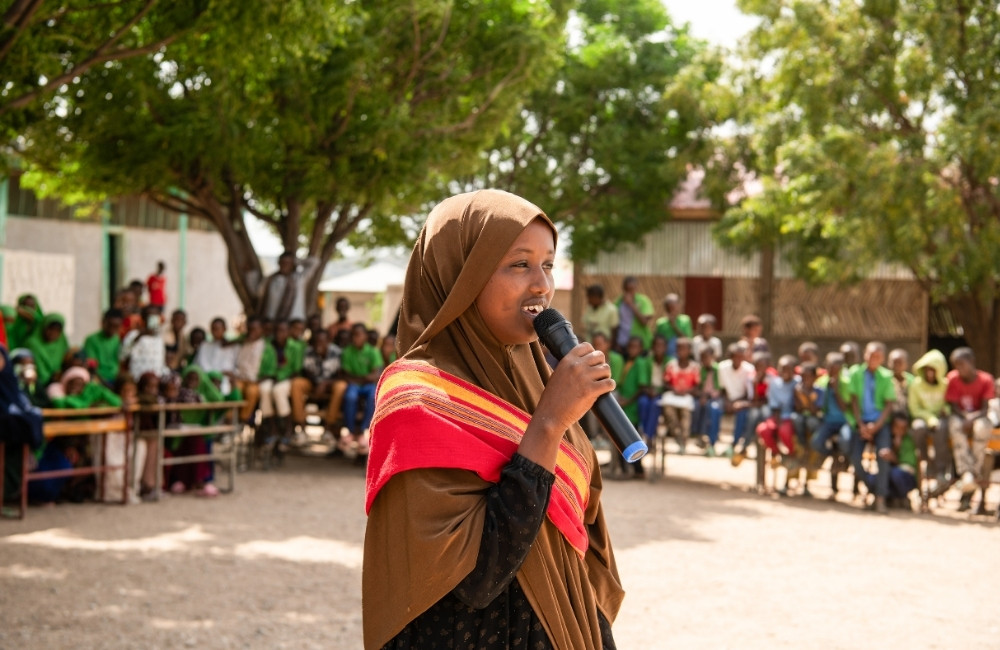
Girls like Selma*, 14, perform street theatre to raise awareness about girls’ rights and the negative impacts of FGM and child marriage.
Photo: Maheder Haileselassie / Save the Children.
8. Save the Children able to respond more swiftly to disasters after getting WHO recognition
Save the Children’s Emergency Health Unit (EHU) has become the first NGO maternal and baby specialist Emergency Medical Team to be verified by the World Health Organisation, meaning it can be deployed to health emergencies in countries across the globe.
The EHU has reached over five million people and trained 18,000 health workers. The teams – comprising doctors, nurses, midwives, physiotherapists, paramedics, logisticians and water and sanitation specialists – are trained to respond rapidly and provide comprehensive support to local health systems.
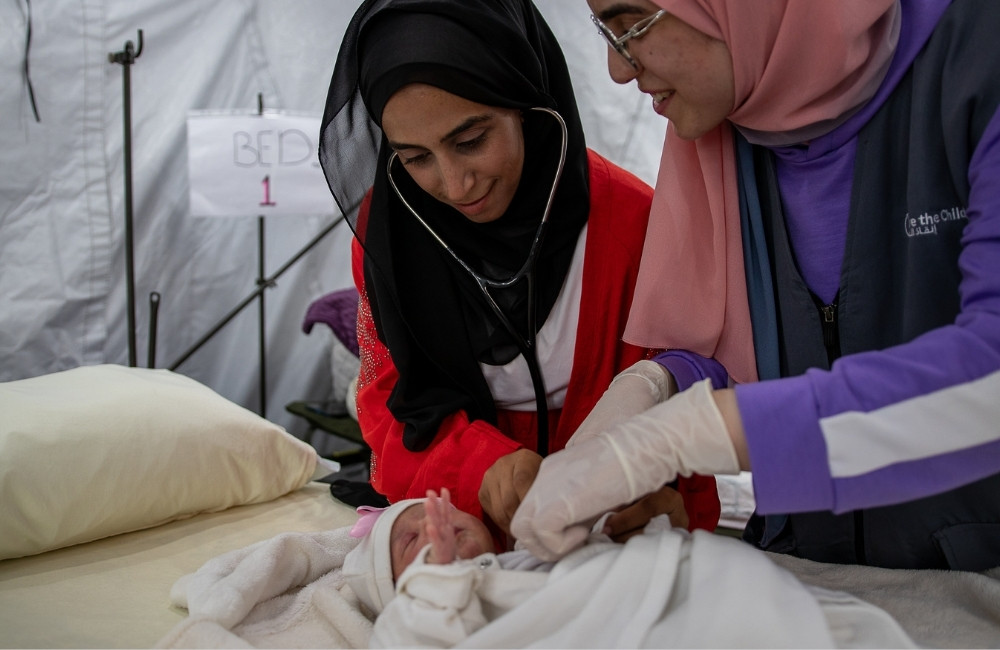
Save the Children midwife Deda* helps new mother Tima* listen to the heartbeat of her baby, Lana*.
Photo: Sacha Myers / Save the Children.
Receiving the WHO certification is recognition of our ability to act swiftly in crises and provide essential care to women and newborns who would otherwise be left without support.
9. Disease-reducing mosquitoes in Laos aim to cut dengue cases
More than 130 million disease-reducing mosquitoes are being released in Laos after cases of dengue hit a record high globally in 2024 at over 14.4 million, more than double the previous record of 2023. With the support of the Australian government, we're using innovative Australian science protect families and keep children safe.
The project rears mosquitoes to carry a naturally occurring bacteria called Wolbachia, which reduces the insect’s ability to transmit deadly viruses – including dengue – to people. When Wolbachia mosquitoes are released, they breed with wild mosquitoes until, over several generations, they become the primary mosquito population, making conditions much safer for children, who are at disproportionate risk.
10. Trained volunteers on bicycles help mothers deliver safely in rural Zambia
In partnership with the Zambian Ministry of Health, some 140 community-based volunteers have been trained to travel on bicycles into remote communities to identify mothers and babies in their homes who might need extra care, and provide them with information and referrals when needed.
In 2025, the team referred 403 pregnant women for prenatal care, enabled 269 mothers to give birth safely in health facilities, and supported 259 mothers to receive postnatal care.
*Names changed for privacy.
The Driving Down Dengue in Laos project is supported by the Australian government.