A lack of essential resources, including clean water and nutritious food, further compounds the situation, affecting their physical health and impeding their growth. Addressing these multifaceted issues is crucial to ensure a brighter future for the children of Vanuatu and foster sustainable development in the region.
As one of the world’s leading children’s organisations, Save the Children works in Vanuatu - and right around the globe - to make sure children are learning, protected from harm, and grow up healthy and strong.
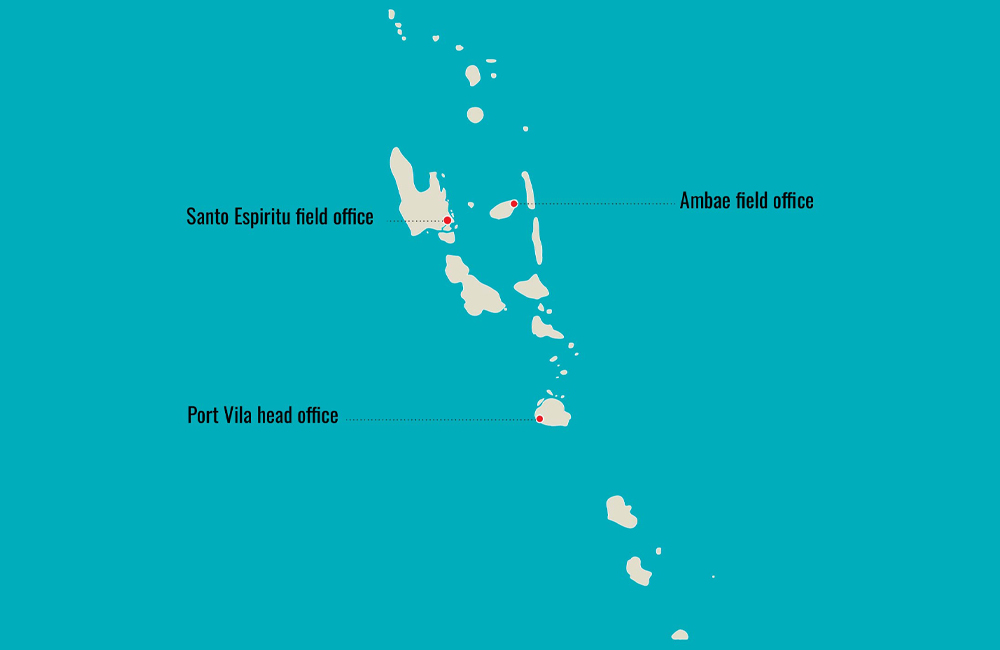
We’ve been operating in Vanuatu for 40 years and are headquartered in Port Vila. We have field offices on Santo Espiritu and Ambae, with our programs and advocacy reaching every province in the country.
To see updates on our Vanuatu Community-based Climate Resilience Project, follow our Facebook Page.
Our Impact
In 2025, Save the Children reached 59,337 people across Vanuatu through our development and humanitarian programs.
This included 47,339 children (23,440 girls and 23,899 boys) and 11,998 adults (6,191 women and 5,807 men).
Our work spans education, child protection, health and nutrition, child rights governance, child poverty and humanitarian response, working alongside communities, government and local partners to ensure children are protected, learning and growing up healthy and resilient.
These figures show the number of people we reached directly and was calculated to reflect accurate data.

This impact is made possible through the generous support of our donors and partners, enabling locally led programs that deliver lasting outcomes for children, families and communities across Vanuatu.
Our dedicated staff work in some of the hardest-to-reach and most remote communities
in Vanuatu to support children and families to become more resilient and overcome vulnerability.
Together with our partners, we help communities and families to adapt to the climate crisis and respond to disasters, as well as supporting children to learn and grow up healthy, safe and resilient.
Education
We know children learn best when teachers have the skills and resources they need, so we’re collaborating with the government of Vanuatu to strengthen the education system.
This includes our work with the Global Partnership for Education, which makes sure schools are well-resourced and are effective learning environments for children, including those with disabilities. We are proud to work with teachers and the Ministry of Education and Training to help give the children of Vanuatu a quality education and minimise disruptions to learning, even when disasters force schools to close.
By prioritizing education as a fundamental right, we help to empower children with the knowledge and skills they need to thrive and contribute positively to their communities in Vanuatu.
-outside-his-school-in-Vanuatu,-which-was-struck-by-a-massive-earthquake-in-December-Web-Image-Body.jpg.aspx)
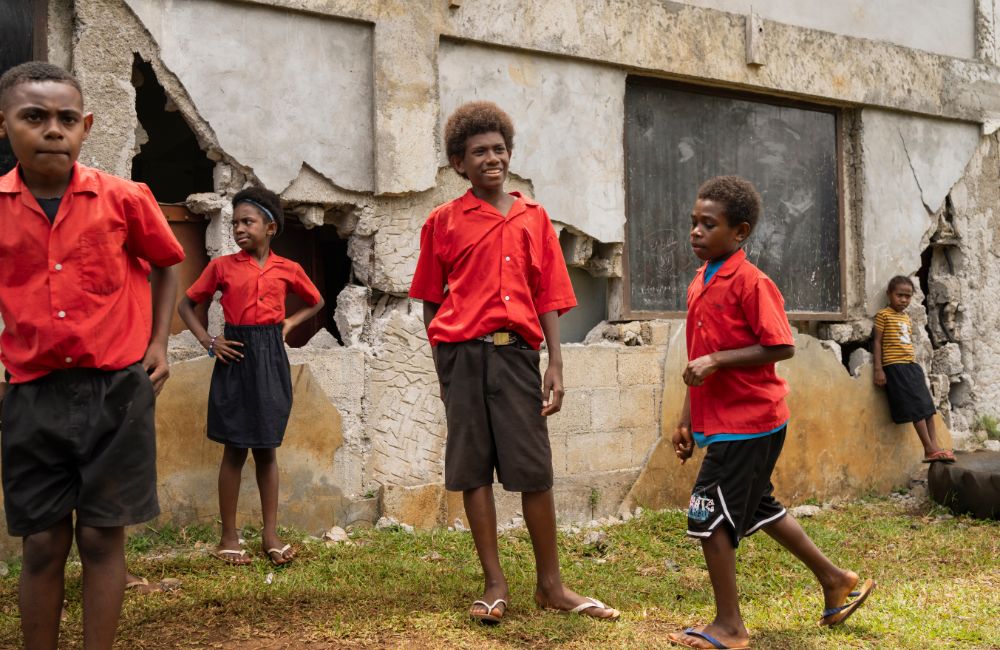
Jayson, 13, (centre, smiling) outside his school in Vanuatu, which was struck by a massive earthquake in December 2024
Climate change
Climate change is already impacting people in Vanuatu. We work with communities to help them to adapt and strengthen their resilience to current and future disaster and climate challenges. We also support children to have a voice in climate action.
We are partnering with the Ministry of Climate Change and six Government Departments to deliver the Vanuatu Community-based Climate Resilience Project (VCCRP), a six-year initiative, working with 282 communities across all six provinces. The project supports communities to plan for and adapt to climate and disaster risks and impacts in key areas of agriculture and food security, fisheries, water resources, climate and disaster risk reduction, and decentralisation.
Through VCCRP, communities receive practical training, equipment, and resources to support locally led adaptation. The project also strengthens decentralization, bringing services closer to rural and remote populations, while promoting long term, community led solutions that help people prepare for and recover from disasters and climate impacts.
VCCRP is a US$32.7 million initiative, funded by the Green Climate Fund, with co financing from the Government of Vanuatu, the Australian Government, and Save the Children Australia.