Project/Icons / advocateProject/Icons / appealsProject/Icons / blog postProject/Icons / documentsProject/Icons / educateProject/Icons / healthProject/Icons / media releaseIcons/moneyIcons/moneyx2Project/Icons / petitionIcons/Ionic/Social/social-pinterestProject/Icons / protectProject/Icons / quoteProject/Icons / supportProject/Icons / volunteerProject/Icons / water
Donate
Page banner

Fostering climate resilience

Helping communities adapt to the climate crisis.

Working together to secure a better future 

Climate-vulnerable countries are facing the harsh realities of climate change. Rising sea levels are threatening coastal villages and farms. Increasingly frequent and severe disasters are threatening more and more lives. Health systems, education and food security are all at risk, with children bearing the greatest burden. For those on the front lines, climate resilience is essential to safeguarding lives, ensuring access to education and healthcare, and protecting future generations.

With the support of the Green Climate Fund, Save the Children is addressing these urgent needs through innovative, community-driven projects. These projects strengthen local systems, restore ecosystems, and equip communities with the tools and knowledge to adapt to climate change, and recover from its disastrous impacts. Together with governments, we are helping ensure that climate-vulnerable communities in Vanuatu, Solomon Islands, Sierra Leone, Mozambique, Laos, Mali, South Sudan, Cambodia, Tonga and Zimbabwe and Malawi are empowered to create a secure and sustainable future for their children.


Our collaboration with the Green Climate Fund spans the globe, reaching those in remote and coastal regions who are most at risk.

Climate-vulnerable countries are already facing the impacts of climate change. Rising seas, more frequent disasters and increasing pressure on health, education and food systems are putting futures at risk; especially for children. Building climate resilience is essential to helping communities adapt, recover and thrive.

With support from the Green Climate Fund, Save the Children is working with governments and communities across the Pacific, Africa and Asia to strengthen local systems, restore ecosystems and build resilience. Together, we are helping create safer, more sustainable futures for children in some of the world's most climate-vulnerable communities.

Vanuatu – Community-based Climate Resilience Project

Communities in Vanuatu, the most disaster-prone country in the world, face escalating challenges from climate change. Rising sea levels, extreme weather events, and shifting agricultural conditions threaten livelihoods, food security, and children’s futures.

The Vanuatu Community-based Climate Resilience Project (VCCRP) is a USD $32.6 million initiative funded by the Green Climate Fund, Australian Department of Foreign Affairs and Trade, and the Government of Vanuatu. The project is transforming how 282 communities across all six provinces of Vanuatu respond to the climate crisis. The project equips Community Disaster & Climate Change Committees to develop locally led adaptation plans, implement nature-based solutions, and promote climate-resilient agriculture and fisheries.

VCCRP will directly benefit 90,000 people. The rest of Vanuatu’s rural population will also benefit from the work of the project to strengthen local governance and institutional linkages. Watch this video to understand how  the largest investment in locally-led adaptation world-wide is laying the foundation for a sustainable future for the communities of Vanuatu. 

Watch the video here.

VCCRP is primarily financed by the Green Climate Fund, with co-financing from the Department of Foreign Affairs and Trade in Australia and Save the Children, and in-kind support from the Government of Vanuatu. 

Solomon Islands – Knowledge, Action, Sustainability for Resilient Villages (SOLKAS)

Solomon Islanders face intensifying climate challenges, including rising sea levels, frequent disasters, and disrupted food systems. These impacts threaten safety, education, and livelihoods in rural and remote communities.

The Knowledge, Action, Sustainability for Resilient Villages (SOLKAS) project is helping 170 communities across six provinces adapt to these threats. The project is laying the foundation for sustainable development by fostering climate adaptation planning in schools and communities, strengthening food security and climate-resilient livelihoods, and empowering young people with entrepreneurial opportunities. Innovative tools like the Digital Climate Risk Assessment and Adaptation Planning system are enabling both communities and governments to assess climate risks and plan effectively.

Directly supporting 185,000 people and indirectly reaching an additional 277,000, SOLKAS is equipping Solomon Islanders with the tools, skills, and resources they need to build a more sustainable and secure future.


Young Solomon Islanders are being supported to think innovatively about theclimate-proof jobs of tomorrow. 
Photo: Connor Ashleigh / Save the Children.

SOLKAS is primarily financed by the Green Climate Fund, with co-financing support from the Australian Department of Foreign Affairs and Trade and the New Zealand Ministry of Foreign Affairs and Trade, and in-kind support from the Government of Solomon Islands. 

The project is delivered in partnership with the Ministry of Environment, Climate Change, Disaster Management and Meteorology; the Ministry of Agriculture and Livestock; Ministry of Provincial Government and Institutional Strengthening; Ministry of Education and Human Resources Development; Ministry of Fisheries and Marine Resources; and the Ministry of Women, Youth, Children and Family Affairs.

Sierra Leone – Coastal Resilience Project

Sierra Leone’s coastal communities are on the frontlines of the growing climate crisis. Rising temperatures, extreme weather, and ecosystem degradation are threatening the lives of families who depend on farming and fishing to make ends meet. Vulnerable children and their families are being forced to make impossible choices, as floodwaters threaten homes and fertile land, and food insecurity spreads.

The Sierra Leone Coastal Resilience Project is empowering 75 communities across five districts to adapt and thrive despite these challenges. Through locally-led interventions, the project is strengthening governance, introducing climate-resilient farming and fishing practices, restoring 1,500 hectares of vital mangroves, and upgrading water, sanitation, and hygiene infrastructure. It also ensures that schools are teaching climate education and disaster preparedness to equip the next generation to face an uncertain future.

With the goal of directly impacting 260,000 people and indirectly benefiting one million more, the project is building inclusive, sustainable resilience for Sierra Leone’s most vulnerable coastal populations.

Restoring and protecting coastal ecosystems like this one in Sierra Leone is a vital step in defending against
the impacts of climate change everywhere. 
Photo: Yagazie Emezi / Save the Children.

This project is primarily financed by the Green Climate Fund, with co-financing support from Clifford Chance, Jersey Overseas Aid, and the Government of Sierra Leone.

The project is delivered in partnership with the Environmental Protection Agency of Sierra Leone, Kaddro, Concern Worldwide, Conservation Society of Sierra Leone, and the Environment Foundation for Africa Sierra Leone. 

Mozambique – Linking Climate Adaptation and Social Protection (LINK)

Mozambique faces escalating climate challenges, including severe droughts and erratic rainfall, which threaten food and water security for rural communities. Vulnerable groups, especially women and children can have limited access to resources and support systems and are disproportionately affected.

The Linking Climate Adaptation and Social Protection (LINK) project is strengthening climate resilience by integrating climate adaptation measures into Mozambique’s social protection programs. Working in nine districts across three provinces, LINK combines Local Adaptation Plans with the Productive Social Action Program to implement drought-resistant farming practices, enhance water management, and develop sustainable livelihoods. These locally led actions are supported by policy updates and capacity building with government to embed climate resilience into planning and budgeting processes.

Over the course of the project, more than 414,000 people will directly benefit, and 559,000 more will be reached. LINK creates sustainable pathways to improve food security, better income generation, and strengthen resilience for Mozambique’s most vulnerable communities.


LINK is helping safeguard some of Mozambique's most vulnerable people by integrating climate adaptation measures
into the country's social protection programs.
Photo: Sacha Myers / Save the Children.

LINK is primarily financed by the Green Climate Fund, with co-financing support from Save the Children Italy, The Norwegian Agency for Development Cooperation (NORAD), the Government of Mozambique Ministry of Land and Environment, and AEROMAPS. 

Lao PDR – Strengthening Climate Resilience of the Health System

Laos faces increasing climate-related health risks, with rising temperatures, erratic rainfall, and frequent extreme weather events threatening rural communities and an already vulnerable health system. The impacts include damaged infrastructure, disruptions to water and sanitation services, and rising disease burdens, exacerbating inequalities for the country’s most marginalised populations.

The Strengthening Climate Resilience of the Lao PDR Health System project is addressing these challenges by building a climate-resilient health system. Through national-level policy development and intensive support in 25 vulnerable districts, the project is upgrading infrastructure in 79 health facilities, enhancing health worker training, and enabling 250 communities to implement locally led health resilience plans. These efforts help improve preparedness for climate-related health impacts while fostering sustainable development.

1.85 million people will directly benefit from the project’s interventions, and 470,000 more will be reached thanks to its initiatives. The project will empower communities and the health system to anticipate, manage, and mitigate the effects of climate change on healthcare, creating a replicable model for low-income countries.

Building a climate-resilient health system will help ensure Laotian children grow up healthy, happy and strong. 
Photo: Fatima Tuj Johora / Save the Children.

Strengthening Climate Resilience is primarily financed by the Green Climate Fund, with co-financing support from the Government of Lao PDR and the World Health Organization. 

Malawi – Climate Resilient Health and Wellbeing for Rural Communities

Malawi faces severe climate impacts, including rising temperatures, changing rainfall patterns, and extreme weather events like droughts and floods, which exacerbate health challenges such as malaria, diarrheal diseases, and malnutrition. These risks are compounded by poverty, gender inequality, and insufficient climate-resilient health infrastructure.

The Climate Resilient Health and Wellbeing for Rural Communities project is strengthening health systems in six vulnerable districts in southern Malawi. This holistic initiative integrates early warning systems, upgrades healthcare and water, sanitation and hygiene infrastructure, trains healthcare workers to address climate risks, and empowers 500 communities to develop locally led climate resilience plans. By enhancing institutional, healthcare, and community capacity, the project builds sustainable health solutions to mitigate climate impacts.

Directly benefiting more than 1.7 million people and indirectly reaching over 2.3 million more, this project combines national, district, and community interventions to ensure vulnerable populations can anticipate, adapt to, and recover from climate-health challenges.

By combining innovative approaches and local expertise, communities are building resilience to climate hazards. 
Photo: Rachel Tarsan / Save the Children.

This project is primarily financed by the Green Climate Fund, with co-financing support from Foundation S – Sanofi, GSK, FCDO, the Government of Malawi, and the Moondance Foundation.

The project is delivered in partnership with Catholic Health Commission of Malawi (CHC) and Creative Centre for Community Mobilisation Malawi.

Mali – Intensification of Agriculture and Agroforestry Techniques (IAAT)

Mali ranks 11th most vulnerable and 23rd least prepared for climate adaptation in the world, with droughts, extreme heat, water scarcity and floods threatening crop yields, fodder, and food security. Yearly droughts affect 400,000 people, while floods impact 500,000 across the country. Future staple yield losses are estimated at 51%-57% for maize and 7-12% for millet by 2050 without adaptation interventions. Though emissions are rising, Mali contributes just 0.01 per cent globally.

IAAT will work with the government, local partners and communities to improve the food, nutrition and water security of smallholder farmers in five highly climate-vulnerable regions of Mali by:
  • Increasing smallholder farmers’ awareness of climate risks and their capacity to adopt Climate Smart Agriculture (CSA) techniques.
  • Adopting 1,000 solar irrigation and 5,000 biodigester systems
  • Creating sustainable markets for CSA and agroforestry products, with a focus on women and youth, climate literacy and MSME incubation initiatives.
  • Strengthening the institutional capacities of government entities and communities at local, regional and national levels.

IAAT is ambitious and aims to reduce GHGs by 2,446,543 tCO2eq through 91,285 Ha of agroforestry sinks, while strengthening the resilience of 431.700 direct beneficiaries and 700,980 indirect beneficiaries.


BRACE – Building Resilient Education Systems

Climate change is increasingly disrupting children's education, with extreme heat, floods, droughts and storms causing school closures and learning interruptions for millions of students worldwide. The Building the Climate Resilience of Children and Communities through the Education Sector (BRACE) is a 5 year initiative (2025-2030) is helping to ensure children can continue learning safely in the face of a changing climate. 

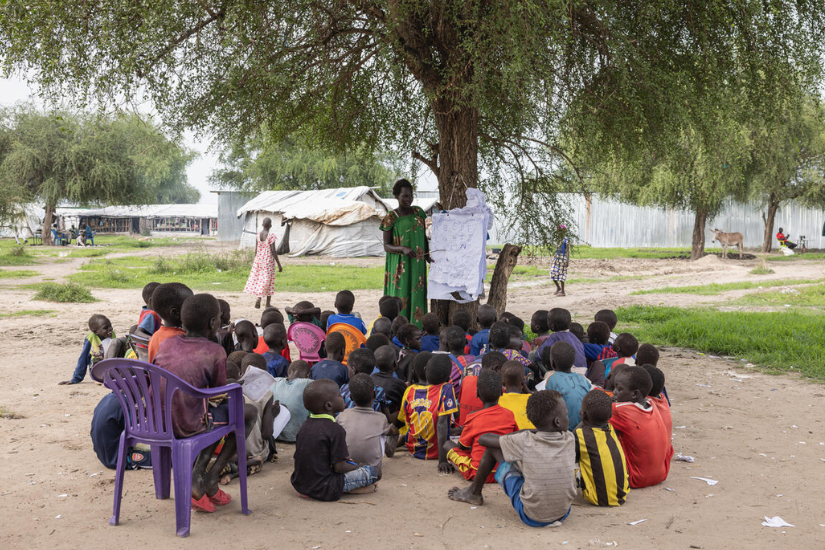
Working across Cambodia, South Sudan and Tonga, BRACE strengthens education systems by retrofitting schools with climate-resilient infrastructure, integrating early warning systems, and embedding climate risk into education policies, planning and curricula.  

Delivered in partnership with governments, the Green Climate Fund and the Global Partnership for Education, the initiative supports safer, more adaptive schools while helping education systems prepare for and respond to climate-related challenges.  

Alongside country level implementation, BRACE also plays a global role in advancing climate-resilient education. It supports ministries of education to access and utilise climate finance, strengthens alignment between education and national climate planning processes, and brings together governments, donors and partners to coordinate efforts, share learning and scale solutions across contexts. 

As the first major investment of climate finance in the education sector, BRACE is generating evidence, strengthening national capacity and creating scalable solutions that can help protect learning for children in climate-vulnerable communities around the world. 

The BRACE project is primarily by the Green Climate Fund (GCF), with co-financing from the Global Partnership for Education (GPE), and is delivered in partnership by Save the Children and the governments of Cambodia, South Sudan and Tonga, alongside local implementation partners.

Climate change is increasingly disrupting children's education, with extreme heat, floods, droughts and storms causing school closures and learning interruptions for millions of students worldwide. The Building the Climate Resilience of Children and Communities through the Education Sector (BRACE) is a 5 year initiative (2025-2030) is helping to ensure children can continue learning safely in the face of a changing climate. 

Working across Cambodia, South Sudan and Tonga, BRACE strengthens education systems by retrofitting schools with climate-resilient infrastructure, integrating early warning systems, and embedding climate risk into education policies, planning and curricula.  

Delivered in partnership with governments, the Green Climate Fund and the Global Partnership for Education, the initiative supports safer, more adaptive schools while helping education systems prepare for and respond to climate-related challenges.  

Alongside country level implementation, BRACE also plays a global role in advancing climate-resilient education. It supports ministries of education to access and utilise climate finance, strengthens alignment between education and national climate planning processes, and brings together governments, donors and partners to coordinate efforts, share learning and scale solutions across contexts. 

As the first major investment of climate finance in the education sector, BRACE is generating evidence, strengthening national capacity and creating scalable solutions that can help protect learning for children in climate-vulnerable communities around the world. 

The BRACE project is primarily by the Green Climate Fund (GCF), with co-financing from the Global Partnership for Education (GPE), and is delivered in partnership by Save the Children and the governments of Cambodia, South Sudan and Tonga, alongside local implementation partners.

Zimbabwe – Adolescents and Youth for a Sustainable Future (AY4SF)

Zimbabwe is among the twenty most climate-vulnerable countries worldwide and faces drought, extreme heat, water scarcity and floods, leaving 70–80 per cent of livelihoods at-risk due to dependency on rain-fed agriculture. This USD 30 million project will empower adolescents and youth to lead local climate adaptation, strengthen ecosystems, and improve livelihoods across six districts in three provinces. Adolescents and youth in Zimbabwe will strengthen their climate resilience to impacts and risks by being equipped with the skills, resources, and green jobs needed to drive local climate adaptation efforts. This is GCF's first project in the country that focuses on youth empowerment in climate-resilient green jobs.

AY4SF will:

  • Restore and sustainably manage 56,750 hectares of land.
  • Support green job creation, financial literacy for vulnerable A&Y and improve access to finance.
  • Promote climate-resilient value chains for crops, livestock, agroforestry and non-timber forest products.
  • Strengthen locally-led adaptation through youth-led, co-created Local Adaptation Plans.

With 240,000 direct and 3.2 million indirect beneficiaries, this project will help reduce vulnerability, inequality, and poverty while building lasting climate resilience led by Zimbabwe’s young people.

Combining innovation, collaboration, and locally led solutions

Through these transformative initiatives supported by the Green Climate Fund and implemented by Save the Children in partnership with governments and local communities, we are creating a more resilient and equitable future for some of the world’s most climate-vulnerable populations. From empowering children and families to withstand the devastating impacts of climate change to strengthening systems that protect livelihoods, health, and education, these projects are proving that meaningful change is not only achievable, it’s already happening.

For further information, contact climate@savethechildren.org.au.

Stay up to date on how Save the Children is creating a world where every child has a safe and happy childhood